
Packing, Logistics & Shipment Capabilities from Egypt.
The best packing route protects the product and fits the buyer’s receiving process. TAS Flowrance supports practical discussions for bulk loading, containerized cargo, jumbo bags, selected small bags, liners, markings, pallets, handling and shipment preparation according to the product and order.
The cheapest bag is not always the lowest-cost shipment.
Packing influences product protection, loading time, freight utilization, handling cost, warehouse space, discharge efficiency, dust, breakage and downstream distribution. The correct decision should consider the full route from Egyptian supply point to the buyer’s receiving system.
Material Behavior
Powder flow, dust, moisture sensitivity, lump breakage, granule integrity and abrasion.
Order Profile
Trial order, container program, repeated monthly volume or larger bulk-vessel shipment.
Handling System
Forklift, crane, bag lifter, conveyor, hopper, warehouse labor and discharge equipment.
Destination Conditions
Port rules, climate, storage, inland transport, package restrictions and final distribution route.
Five commercial routes—selected by product and buyer requirements.
Availability is not universal across every product. Final bag type, weight, dimensions, liner, markings, pallet or bulk route must be confirmed in the current quotation.
Bulk Vessel Shipment
For compatible products and larger programs where loading port, vessel, cargo hold, discharge and receiving systems are suitable.
Containerized Cargo
Loose, bagged or jumbo-bag container discussion according to product behavior, loading method and destination handling.
Jumbo Bags
Controlled unit handling for industrial buyers using forklifts, cranes, lifting loops or warehouse distribution.
Selected Small Bags
Distribution or production packing where bag weight, material, closure, markings and pallet needs are confirmed.
Buyer-Specific Details
Inner liners, special markings, pallets, wrapping, labels or securing methods can be discussed when technically and commercially agreed.
Six different images covering the complete packing decision.
The images move from small bags and jumbo-bag handling to container loading, final sealing and bulk port operations. No image is repeated inside this page.
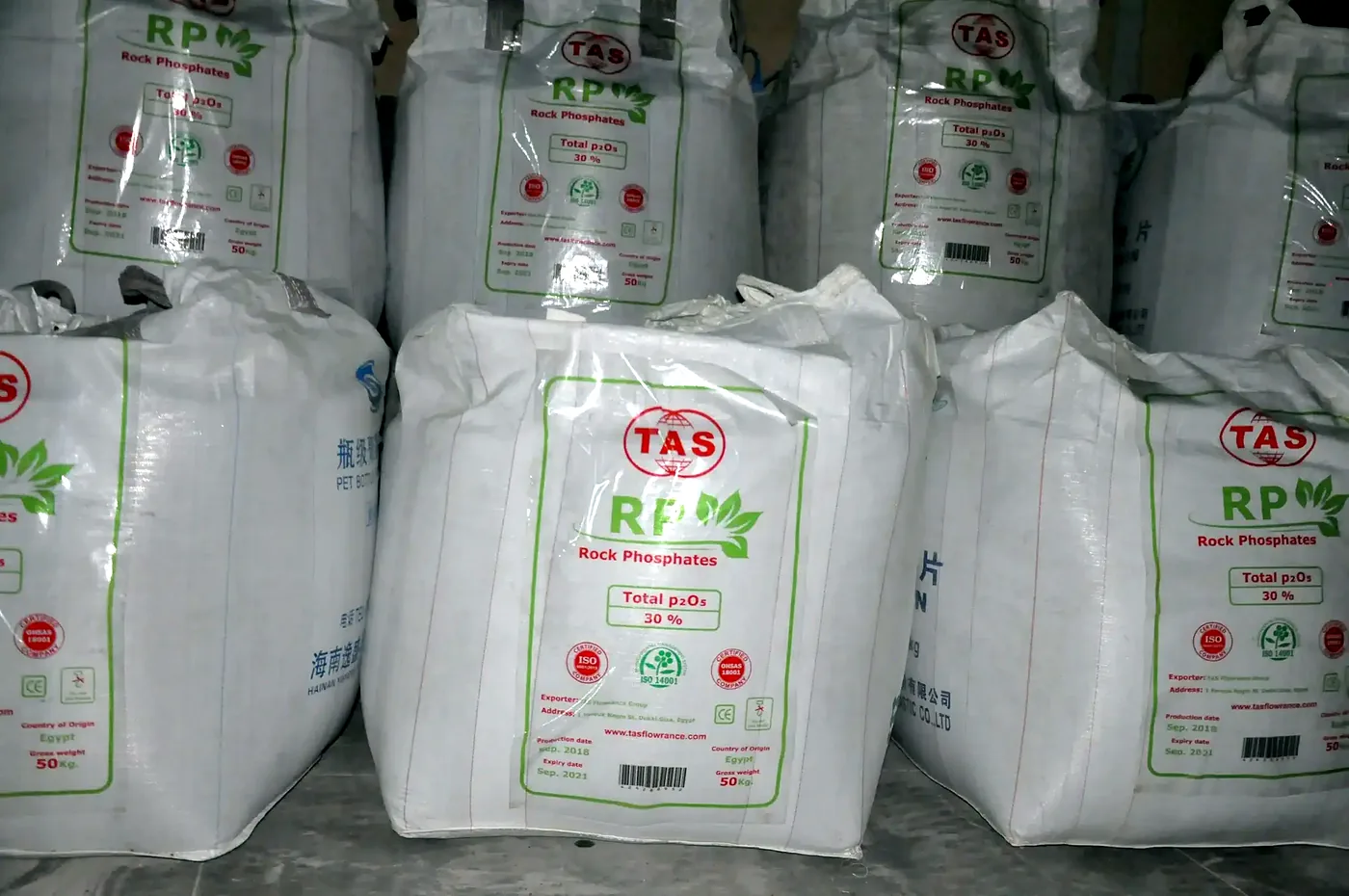
Small-Bag Programs
Bag weight, material, closure, printed information, liner, pallet and distribution requirements should be confirmed for the selected product.
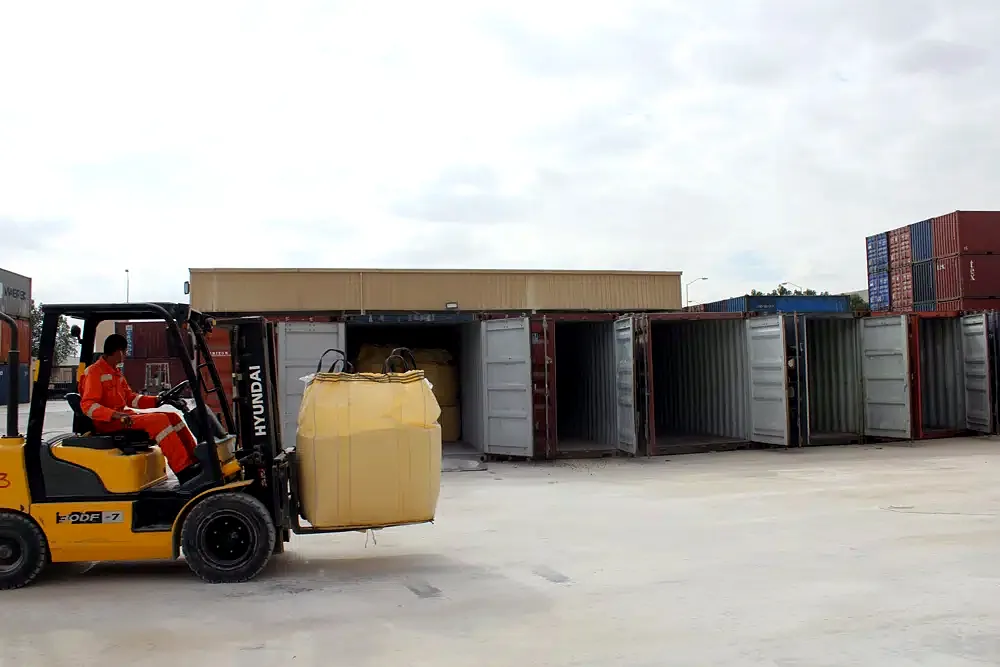
Controlled Yard Movement
Lifting loops, forklift access, bag condition, route clearance and container positioning affect safe and efficient handling.
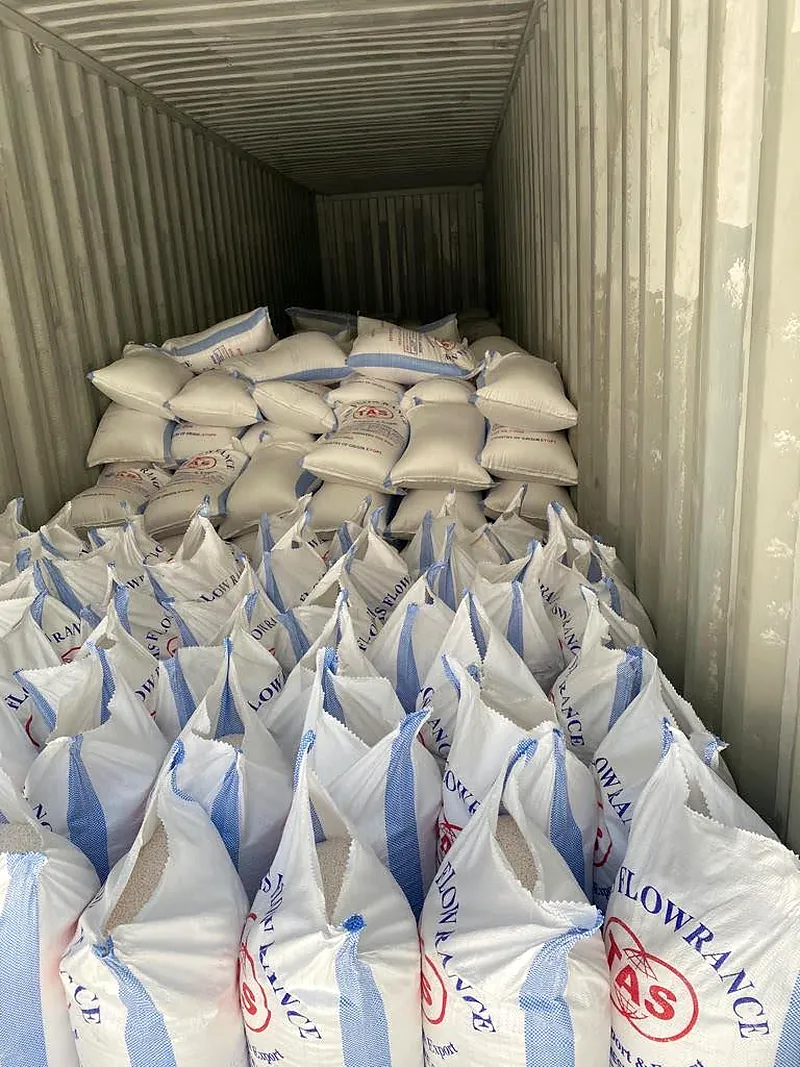
Container Load Arrangement
Package count, weight distribution, securing, door clearance and unloading practicality should match the agreed plan.
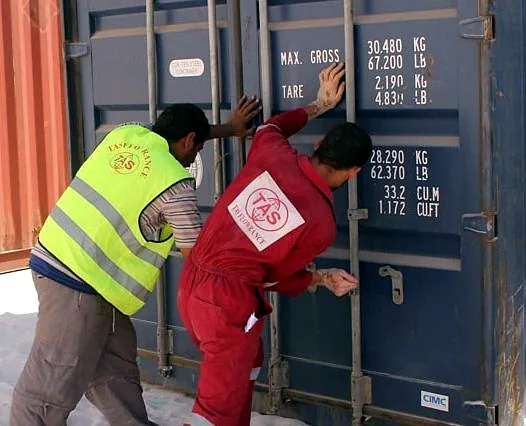
Final Closure & Dispatch Evidence
Visible container condition, closure, seal reference and dispatch records can support the agreed shipment documentation.
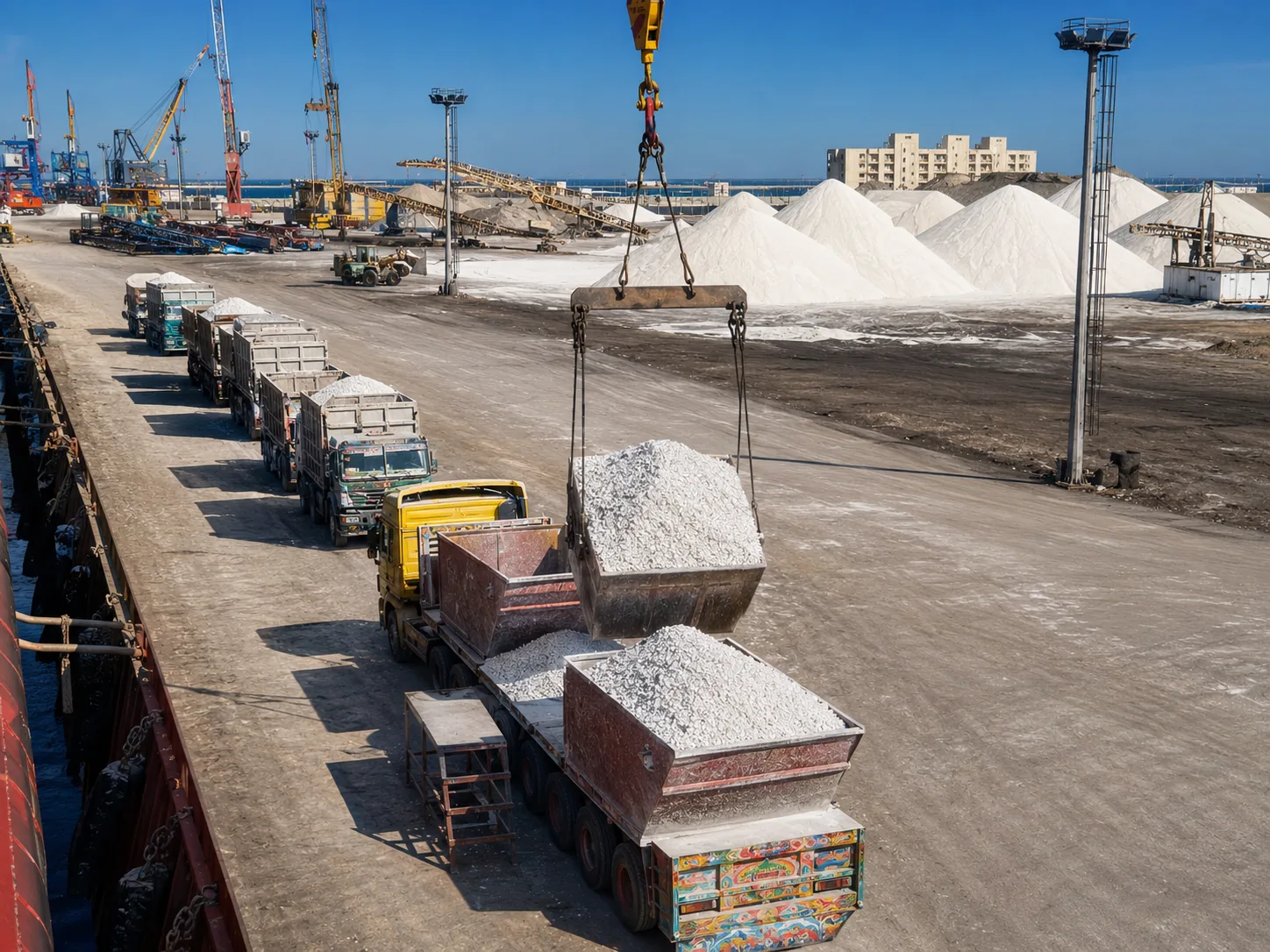
Bulk Shipment Route
Bulk programs require a connected review of stock availability, truck sequence, port handling, vessel conditions, loading rate, inspection, quantity basis, cargo-hold readiness and destination discharge capability.
Choose the route by product behavior and receiving requirements.
This matrix supports early decision-making. The selected product, current offer, bag specification, loading plan and destination conditions govern the final route.
| Route | Best Reviewed For | Critical Buyer Confirmation |
|---|---|---|
| Bulk Vessel | Larger compatible mineral or fertilizer shipment programs. | Port, vessel, cargo hold, quantity basis, discharge equipment, storage and inspection. |
| Loose Container | Compatible lumps or materials loaded directly with controlled handling. | Product breakage, moisture, contamination, load distribution and unloading method. |
| Jumbo Bags | Industrial receiving, containerization and controlled unit handling. | Nominal bag weight, dimensions, safe working load, loops, liner, filling and discharge design. |
| Small Bags | Distribution, manual handling or production-feed requirements. | Bag weight, film or woven material, liner, closure, markings, pallet and warehouse conditions. |
| Palletized / Wrapped | Selected warehouse, distribution or handling programs when agreed. | Pallet standard, stacking, wrap, dimensions, forklift access and destination restrictions. |
A connected route from product release to buyer receiving.
Product Release
Confirm product, lot, quantity, analysis and readiness for the selected packing route.
Packing Preparation
Confirm bags, liners, markings, pallets, filling sequence and visible package condition.
Yard Handling
Plan forklift, crane, loader or truck movement while maintaining product and lot identity.
Container or Port Loading
Execute the agreed load arrangement, bulk route, inspection and quantity-control basis.
Closure & Dispatch
Confirm container closure, seal information, dispatch records or vessel-loading milestones.
Buyer Receiving
Align documents, unloading plan, storage, equipment and receiving inspection requirements.
The packing decision is only complete when the buyer can unload it.
Unloading Equipment
Confirm forklift capacity, crane hooks, bag lifters, hoppers, conveyor or manual labor before selecting the route.
Warehouse & Storage
Review floor condition, stacking, moisture control, ventilation, covered space and expected storage duration.
Production Feeding
Bag size, discharge design, powder flow, lump size and dust control should fit the receiving process.
Container Turnaround
Door access, unloading time, labor, equipment and local detention risk can affect total delivered cost.
Bulk Discharge
Port draft, berth, grab or conveyor, discharge rate, stock area and inland transport require buyer confirmation.
Receiving Inspection
Package condition, seal, quantity, visible contamination and agreed quality documents should be checked on arrival.
Connect packing with quality, documentation and the final RFQ.
Quality Assurance & Inspection
Specification, lot traceability, sampling, current COA and pre-loading controls.
Open Quality Assurance → Shipment DocumentsExport Process & Documentation
Quotation, Incoterms, shipment readiness, documents and final handover.
Open Export Process → Product ResourcesTechnical Resources
Review the relevant product data sheet before selecting packing and handling.
Open Technical Resources → Company TrustWhy TAS Flowrance
Review the company position, buyer focus and operational export-support model.
Why TAS Flowrance →Send the information needed to select the correct route.
Include product behavior, quantity, preferred packing, destination, receiving equipment, Incoterm and shipment timing.
Official TAS Flowrance Export Inquiry Form
Send the product, quantity, packing, container or bulk route, destination, receiving system and required shipment details.
Packing and logistics questions from international buyers.
What packing routes can TAS Flowrance discuss?
Depending on the product and order, routes can include bulk vessel loading, containers, jumbo bags, selected small bags and buyer-specific details when agreed.
Is one packing method suitable for every product?
No. Product form, moisture, dust, breakage, quantity, handling equipment, destination and receiving process should guide the route.
Can container sealing and loading evidence be discussed?
Container preparation, visible package condition, loading arrangement and final sealing can be discussed according to the agreed shipment scope.
What information is required for quotation?
Send product, form, quantity, packing preference, bag or jumbo-bag size, liner or pallet needs, route, destination port, receiving equipment, Incoterm and timing.