
Water Treatment Buyer Guide
Filtration Sand and Gravel Specifications: Effective Size, UC and Filter-Bed Layers
A filtration-media quotation should not begin with price alone. It should begin with the treatment process, required sand and gravel layers, particle-size distribution, effective size, uniformity coefficient, cleanliness, chemistry, packing and the evidence that will govern final acceptance.
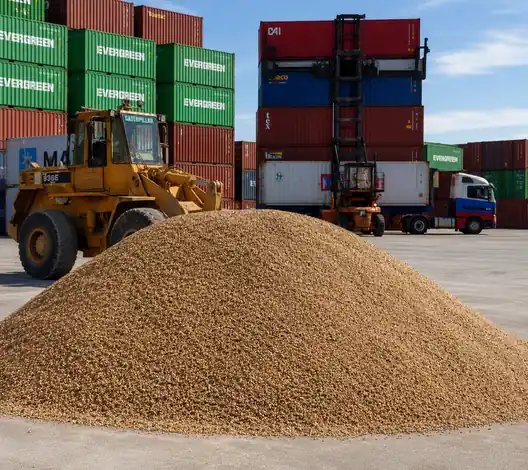
Why filtration-media selection starts before the quotation
Filtration sand and filtration gravel are functional components of a treatment system. The correct media depends on the water source, pretreatment stage, filtration rate, vessel or filter design, backwash conditions, target water quality and the role of each layer in the bed.
That is why a serious supplier should not present one universal size as suitable for every plant, pool, pressure filter, wastewater unit or multi-media system. The buyer’s project specification and current test results must remain the controlling reference.
TAS Flowrance presents the commercial product range on the Egyptian filtration sand and gravel product page, while this guide explains the technical questions procurement and engineering teams should resolve before requesting a firm quotation.
Particle-size range, effective size and UC are not the same thing
Nominal particle-size range
A range such as 0.6–1.25 mm describes the stated lower and upper commercial limits. It is useful for identifying a grade, but it does not show how particles are distributed between those limits.
Effective size — D10
D10 is the sieve opening at which 10% of the sample passes by weight. It is calculated from a sieve-analysis curve and describes the finer controlling portion of a granular medium.
D60
D60 is the particle size at which 60% of the sample passes by weight. It is used with D10 to calculate the uniformity coefficient.
Uniformity coefficient — UC
UC is a grading-consistency indicator. A lower value generally represents a narrower distribution, while a higher value indicates a wider spread. The acceptable value must come from the applicable design or project standard.
What each filter-bed layer is expected to do
A filter bed is not simply a volume of sand. Each layer should be selected for a defined function, and the transition between layers should be checked against the filter design to reduce unwanted media migration.
| Media layer | Primary role | Buyer should confirm | Common procurement mistake |
|---|---|---|---|
| Fine or selected filtration sand | Provides the principal filtration zone for the selected process. | Size range, D10, UC, fines, cleanliness, chemistry and approved sample. | Buying only by nominal millimetre range without a current sieve curve. |
| Coarse filtration sand | May serve a coarser filtration duty or transition function, depending on design. | Layer position, compatibility with adjacent media and hydraulic requirements. | Assuming a coarser product is automatically suitable for higher flow. |
| Graded support gravel | Supports upper media, assists water distribution and protects the underdrain system. | Grading, layer sequence, particle shape, cleanliness and underdrain compatibility. | Ordering one gravel size without checking the complete support-layer design. |
| Custom project media | Matches a plant-specific or equipment-manufacturer specification. | Full written specification, tolerances, testing method and acceptance procedure. | Replacing the specified media with a “close equivalent” before engineering approval. |
For a wider application view, review the water treatment and filtration media industry page. Final layer design remains the responsibility of the project engineer, system designer or equipment manufacturer.
The seven technical checks that protect a filtration-media order
1. Current sieve analysis
The sieve analysis should show the particle-size distribution for the offered material. Buyers should compare the reported grading with the required limits and confirm how samples were taken and tested.
2. Effective size and uniformity coefficient
D10 and UC should be stated when required by the design. They must be derived from current grading data, not copied from a generic brochure.
3. Cleanliness and fines
Excess dust, clay or unwanted fine material can complicate commissioning and washing. The quotation should state whether washing status, fines limits or a specific cleanliness test form part of the order.
4. Chemistry and source suitability
The required chemistry depends on the application. Buyers may request silica content, impurity limits, acid solubility or another project-specific test. Accepted values should be tied to the selected source and lot.
5. Particle durability and shape
Media should be reviewed for the mechanical and hydraulic duty of the filter. Abrasion, breakage and unsuitable particle form may change bed behaviour over time. State the required test method when durability is critical.
6. Approved pre-shipment sample
A sample can support visual and laboratory review, but purchase terms should define how production-lot conformity will be verified. Sample approval alone should not replace shipment testing where the project requires it.
7. Contractual acceptance documents
The commercial offer should identify the governing specification, test documents, packing, tolerances, inspection rights and the procedure for handling non-conformity. TAS Flowrance’s filtration media technical data sheet provides a structured starting point.
Reference sizes are a starting point—not a universal design
TAS Flowrance can discuss filtration sand and gravel in several reference size ranges, including fine, selected and coarse media, as well as graded support gravel. Availability and final suitability must be confirmed against the current source, project requirement and approved test data.
| Reference product | Commercial reference size | Typical discussion point | Final control |
|---|---|---|---|
| Fine filtration sand | 0.0–0.5 mm | Fine layers and selected treatment duties. | Buyer specification and current sieve analysis. |
| Filtration sand | 0.5–1.0 mm | Sand filters and water-treatment systems. | Filter design, D10, UC, cleanliness and chemistry. |
| Selected filter sand | 0.6–1.25 mm | Pressure filters and multi-media filter discussions. | Approved project specification and current test. |
| Coarse filtration sand | 1.0–2.0 mm | Coarser filtration or transition-layer discussions. | Hydraulic duty and adjacent-layer compatibility. |
| Filtration gravel | 3.0–7.0 mm | Support-layer and water-distribution discussions. | Underdrain design and complete layer sequence. |
| Custom grading | Upon review | Plant, contractor or equipment-specific requirement. | Written specification, feasibility and final offer. |
Real product and export evidence matters
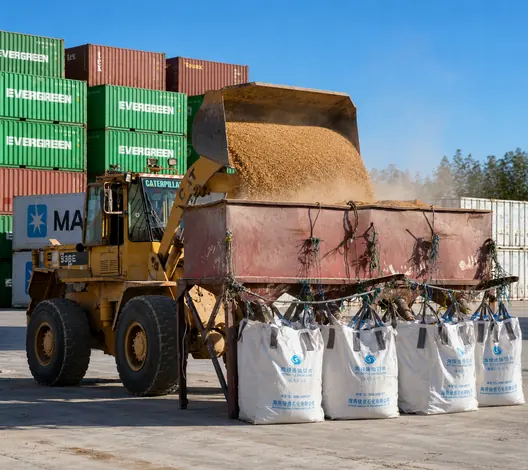
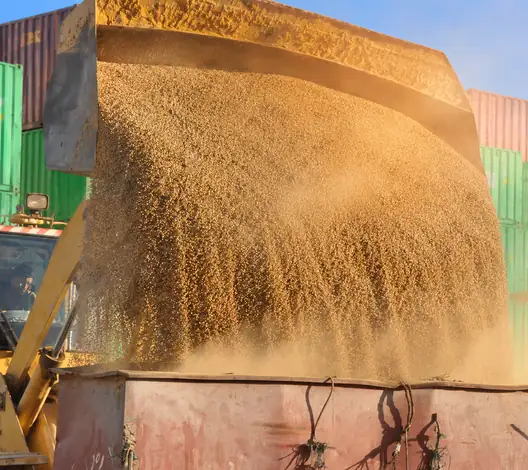
Technical documents should be supported by current product, stock, packing and handling evidence. Buyers can review the complete filtration sand and gravel photo gallery and the dedicated industrial minerals video library before requesting samples or inspection.
A practical procurement workflow from specification to shipment
TAS Flowrance explains its commercial and quality workflow on How We Work, while shipment planning and documentation are covered under Export Operations.
What a complete filtration-media RFQ should contain
Technical information
- Water-treatment application and filter type.
- Required sand and gravel layers.
- Particle-size range and tolerances.
- Required D10, D60 and uniformity coefficient.
- Chemistry, acid-solubility or cleanliness limits.
- Applicable project, client or equipment standard.
- Sample and third-party inspection requirements.
Commercial information
- Total order quantity and shipment schedule.
- Bulk, jumbo-bag or bagged packing preference.
- Destination country and destination port.
- Required Incoterm: FOB, CFR or CIF.
- Required delivery date or project milestone.
- Documentation and certificate requirements.
- Company name and procurement contact details.
Frequently asked questions
What is effective size in filtration sand?
Effective size, normally written as D10, is the particle size at which 10% of the sample passes by weight during sieve analysis. It should be compared with the approved filtration design rather than used as a universal value.
How is the uniformity coefficient calculated?
Uniformity coefficient is calculated as D60 divided by D10. It helps the buyer review the width of the particle-size distribution. The acceptable UC depends on the treatment process and project specification.
Is filtration gravel the same as filter sand?
No. Filtration sand normally performs the principal filtration duty, while graded gravel is often used in support and transition layers. The complete arrangement must match the filter and underdrain design.
Can filtration sand be selected by millimetre size only?
A millimetre range is useful for identifying a grade, but buyers should also review the sieve curve, D10, UC, fines, cleanliness, chemistry and project-specific acceptance requirements.
What documents should be requested before purchase?
Depending on the project, buyers may request a current COA, sieve analysis, approved sample record, packing confirmation, inspection report, commercial invoice, packing list, certificate of origin and bill of lading.
Does TAS Flowrance offer custom filtration-media sizes?
Custom size discussions can be reviewed against the required specification, source capability, quantity and current production data. Feasibility and final values must be confirmed in the commercial offer.
Request Egyptian filtration sand and gravel for your project
Send the required media layers, particle sizes, effective size, uniformity coefficient, quantity, packing, destination port and intended application. TAS Flowrance will review the technical and commercial requirement before preparing a quotation.
Technical reference: the U.S. Environmental Protection Agency defines effective size (D10), uniformity coefficient and sieve analysis in its guidance on slow sand filtration. Application values differ by treatment process and must not be transferred to another filter design without engineering approval. Open the official EPA guidance.