
Industrial Phosphate Procurement Guide
Phosphate Rock Buying Guide: Compare P₂O₅, BPL, MER and Cost per Contained P₂O₅
Phosphate rock—also called rock phosphate in many commercial searches—should not be compared by headline grade or price per metric ton alone. A serious buyer compares the analytical basis, dry contained P₂O₅, BPL, impurity profile, minor element ratio, CaO/P₂O₅ ratio, particle size, sample traceability and the process cost created by the complete material.
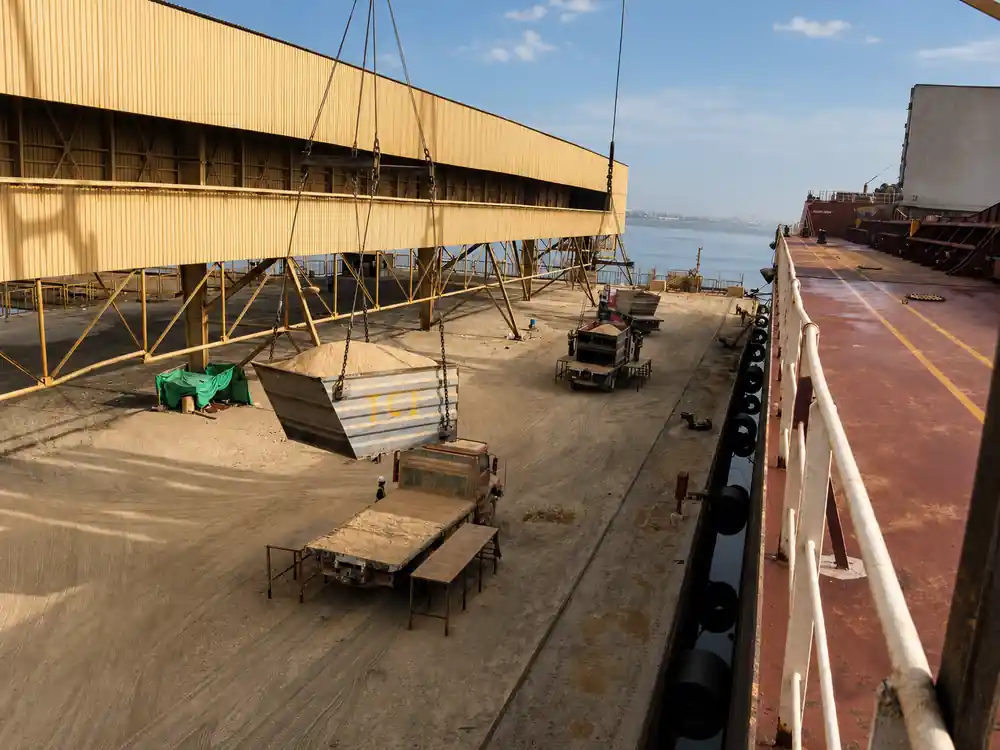
Phosphate rock or rock phosphate: which term should buyers use?
Both terms describe the natural phosphatic mineral raw material. Phosphate rock is the standard commodity and technical expression used by international geological, fertilizer and market sources. Rock phosphate remains common in agricultural trade, distributor enquiries and regional buyer language.
For procurement documents, use one clear product identity—such as “Egyptian phosphate rock”—then state the required P₂O₅ grade, form, size, application and analytical basis. The wording is less important than eliminating ambiguity between raw phosphate rock, granular phosphate, direct-application material, SSP, TSP and other processed products.
TAS Flowrance separates these product routes in the fertilizer products and phosphate raw materials hub.
Start by defining what the P₂O₅ number actually means
P₂O₅ is the principal commercial grade indicator, but the same written number can represent different things. A quotation may show a typical analysis, a guaranteed minimum, a historical reference, a stockpile result or a shipment-specific result. It may also be reported on an as-received basis or after correcting for moisture.
As-received basis
The result describes the sample in its received condition, including the moisture present at the time of analysis. Confirm whether this is also the commercial weight and acceptance basis.
Dry basis
The result is normalized after moisture correction. When price is paid on wet shipment weight, moisture must be handled separately to calculate contained dry P₂O₅.
Typical result
Useful for screening, but not necessarily guaranteed. A typical value should not replace the minimum, maximum, tolerance and remedy stated in the final contract.
Guaranteed minimum
A commercial control only when the method, sampling point, laboratory, rounding rule, penalty or rejection treatment and governing document are agreed.
P₂O₅ and BPL: two ways of expressing phosphate grade
BPL means Bone Phosphate of Lime, an older but still widely recognized commercial expression. The International Atomic Energy Agency notes that one BPL unit corresponds to 0.4576% P₂O₅. Therefore, a 30% P₂O₅ rock is approximately 65.6 BPL.
| P₂O₅ | Approximate BPL | Correct buyer interpretation |
|---|---|---|
| 26% | 56.8 BPL | Grade conversion only; full chemistry and process fit remain separate. |
| 27% | 59.0 BPL | Do not assume identical performance between deposits with the same grade. |
| 28% | 61.2 BPL | Compare impurities, moisture, sizing, mineralogy and current lot evidence. |
| 29% | 63.4 BPL | Confirm whether the figure is minimum, typical, dry basis or as received. |
| 30% | 65.6 BPL | Higher contained phosphate does not automatically mean lowest processing cost. |
Buyers can review TAS grade positioning on the phosphate rock grades page and the broader chemical and particle-size framework on the phosphate rock specifications page.
Compare cost per contained P₂O₅—not only price per wet tonne
A useful first commercial normalization is the cost of one tonne of contained P₂O₅ delivered to the buyer. This does not replace plant testing, but it exposes the effect of moisture and grade before more complex process economics are added.
| Illustrative comparison | Offer A | Offer B |
|---|---|---|
| Dry-basis P₂O₅ | 30% | 28% |
| Free moisture | 5% | 2% |
| Landed price index per wet tonne | 100 units | 94 units |
| Contained P₂O₅ per wet tonne | 0.285 tonne | 0.2744 tonne |
| Price index per contained P₂O₅ tonne | 350.88 units | 342.57 units |
For the commercial variables that shape FOB, CFR and CIF quotations, continue to the phosphate rock price factors page.
MER and CaO/P₂O₅ reveal what headline grade can hide
Phosphoric-acid and fertilizer plants often review ratios that connect impurities to the valuable phosphate content. Two common technical indicators are the minor element ratio and the CaO/P₂O₅ ratio. They are screening tools, not universal acceptance limits; every plant should apply its own process model and laboratory methods.
Minor Element Ratio — MER
A commonly published calculation relates Al₂O₃, Fe₂O₃ and MgO to P₂O₅:
MER (%) = 100 × (Al₂O₃ + Fe₂O₃ + MgO) ÷ P₂O₅
Some commercial documents report MER as a decimal ratio rather than a percentage. State the convention before comparing offers.
CaO/P₂O₅ weight ratio
This ratio is widely used as a phosphate-rock quality indicator for processing review. It helps the plant assess the calcium burden relative to the phosphate value, but the acceptable range depends on mineralogy, acid route, plant design and product target.
The impurity matrix determines process fit
The correct limits differ between fertilizer manufacture, wet-process phosphoric acid, direct agricultural use and other industrial routes. TAS Flowrance connects buyers to the relevant application path through the fertilizer manufacturing and phosphate processing page .
Particle size changes handling, reactivity and plant stability
Chemistry alone does not describe the physical feed. Powder, crushed material and lumps behave differently during loading, storage, transfer, crushing, grinding and reaction. Even two powders with the same P₂O₅ can have different fine fractions, dust behaviour and feeding consistency.
| Physical form | Potential buyer advantage | Main control required | Risk if undefined |
|---|---|---|---|
| Powder | May reduce downstream size-reduction demand. | Full sieve distribution, ultrafines, moisture, dust and flow behaviour. | Dust, caking, segregation or unstable feeding. |
| Crushed / screened | Can match a defined crusher, mill or handling route. | Top size, principal fraction, fines and oversize tolerance. | Extra screening, crushing or process interruption. |
| Lumps | May reduce dust during selected bulk-handling programmes. | Lump-size range, breakage, moisture and downstream crushing capability. | Variable crusher load, breakage fines or receiving difficulty. |
Buyers can compare the dedicated phosphate rock powder and phosphate rock lumps supply routes before fixing the RFQ.
A COA is only as reliable as the sample behind it
A technically impressive certificate is not enough if the sample cannot be linked to the offered stockpile, lot or shipment. Procurement should know who sampled, where increments were taken, how the composite sample was prepared, how duplicates were sealed, which laboratory tested it and which result controls the contract.
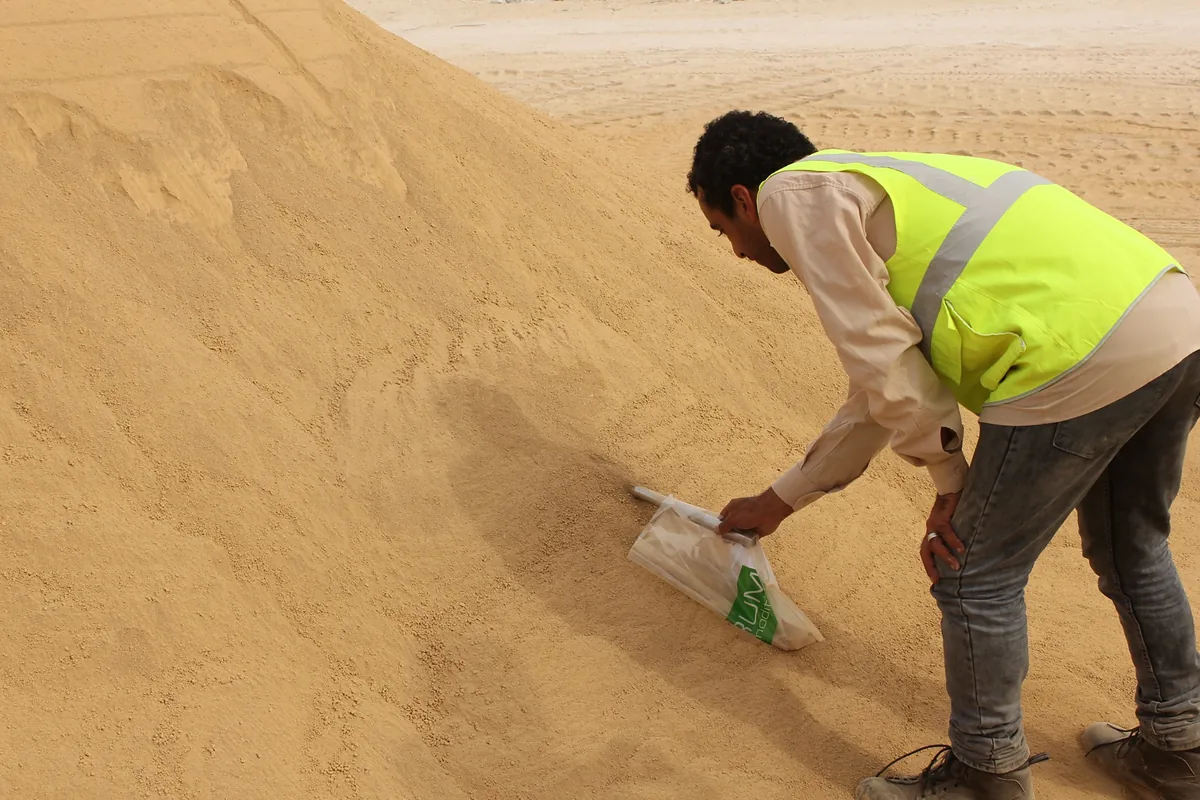
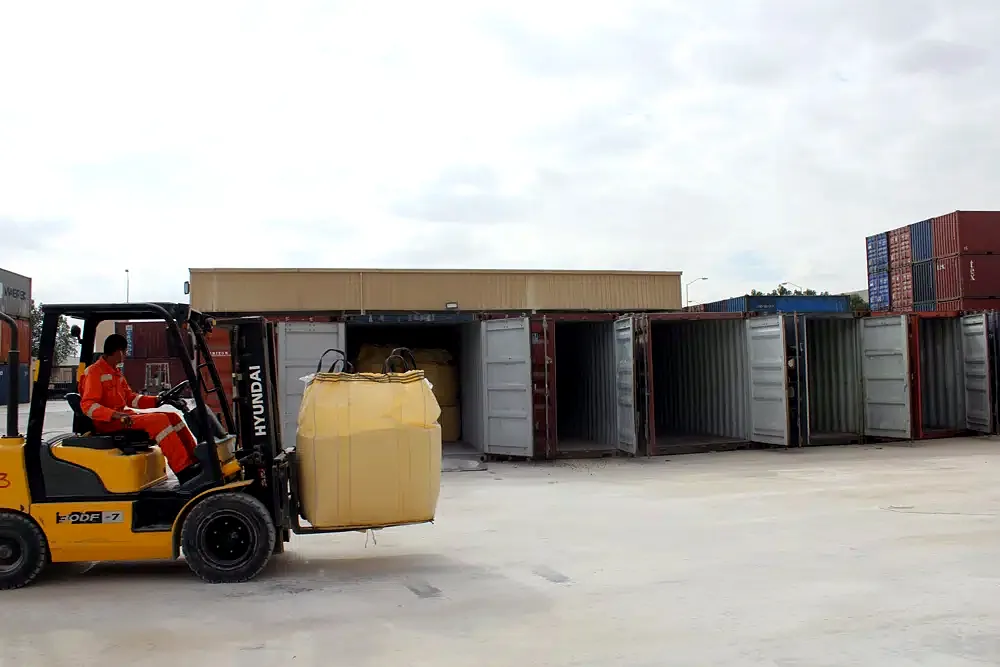
Review the complete phosphate rock quality-control route and the real phosphate logistics and packing portfolio .
Build a weighted comparison—not a one-number decision
A professional purchasing team can score each offer against the factors that matter to its plant. The weighting should be established before commercial offers are opened, reducing the risk that the cheapest headline price dominates the decision.
| Comparison block | Suggested buyer questions | Evidence required |
|---|---|---|
| Contained phosphate economics | What is the cost per dry contained P₂O₅ tonne? | Price basis, moisture basis, P₂O₅ basis and weight basis. |
| Process chemistry | What are MER, CaO/P₂O₅ and application-specific impurity limits? | Current complete analysis and plant review. |
| Physical performance | Will PSD, fines, moisture and form fit the receiving and processing system? | Sieve analysis, moisture test, sample and handling plan. |
| Consistency | Can the supplier maintain the agreed range over the shipment programme? | Lot records, current COAs, sampling and deviation history. |
| Logistics | Does packing and shipment mode fit the destination infrastructure? | Loading plan, packing specification, weight and port details. |
| Contract protection | What happens if grade, moisture, impurities or size fall outside tolerance? | Signed specification, adjustment formula, rejection and dispute clauses. |
What a world-class phosphate rock RFQ should contain
Technical requirement
- Intended process and final product.
- P₂O₅ target, minimum and wet/dry reporting basis.
- Required BPL, if used commercially.
- Maximum CaO/P₂O₅ ratio or plant-specific chemistry limits.
- MER convention and limits, when required.
- SiO₂, Fe₂O₃, Al₂O₃, MgO, F, Cl, Cd, CO₂ and LOI limits as applicable.
- Free moisture, form and complete particle-size distribution.
- Sampling, laboratory, inspection and process-test requirements.
Commercial requirement
- Trial, shipment, monthly and annual quantity.
- Bulk, jumbo bags, selected small bags or container route.
- Destination country and exact port.
- FOB, CFR or CIF basis with named port.
- Loading and arrival window.
- Weight basis and moisture adjustment method.
- Required origin, analysis, inspection and shipping documents.
- Price-adjustment and rejection framework.
Packing and shipment options are detailed on the phosphate rock packaging and shipping page, while execution stages appear on Export Operations.
Frequently asked questions
Is phosphate rock the same as rock phosphate?
The terms normally refer to the same natural phosphatic mineral raw material. “Phosphate rock” is the standard international commodity expression, while “rock phosphate” is common in agricultural and regional trade language.
How do I convert P₂O₅ to BPL?
Approximate BPL by dividing P₂O₅ by 0.4576, or multiplying P₂O₅ by about 2.1853. For example, 30% P₂O₅ is approximately 65.6 BPL.
Why is a higher P₂O₅ grade not always the cheapest option?
The delivered economics also depend on moisture, price, impurity burden, recovery, acid consumption, filtration, grinding, waste, particle size and plant compatibility.
What is MER in phosphate rock?
MER is a minor-element indicator commonly calculated from Al₂O₃, Fe₂O₃ and MgO relative to P₂O₅. Confirm whether the supplier reports it as a decimal ratio or percentage and ensure all values use the same analytical basis.
Should phosphate rock be approved from a reference COA?
A reference COA supports screening only. Final acceptance should be linked to a representative, traceable sample and the current lot or shipment, using agreed methods and contract tolerances.
What information does TAS Flowrance need for a quotation?
Send the application, P₂O₅ grade and basis, complete chemistry limits, form, particle size, quantity, packing, destination port, Incoterm, inspection scope, documents and shipment timing.
Compare Egyptian phosphate rock on a complete technical and commercial basis
Send your P₂O₅ target, analytical basis, impurity limits, product form, size, quantity, packing, destination port and inspection requirement. TAS Flowrance will review the requirement before confirming the relevant supply and quotation route.
Technical references: the U.S. Geological Survey uses “phosphate rock” as the international mineral-commodity term; the IAEA explains the BPL-to-P₂O₅ relationship; and peer-reviewed phosphate-rock quality research discusses MER and CaO/P₂O₅ as processing indicators. USGS phosphate rock information · IAEA phosphate-rock reference · Phosphate-rock quality study.